
Is Pico Laser Really the Best Laser for Pores?
It is not uncommon for pores to be a common Singaporean skin problem, given our climate.
While there is really nothing wrong with it, some people may dislike how it makes their skin texture appear.
The pico laser has long been sought after for minimising pores – but is it really the most efficient for pores? Let’s find out.
Unfortunately, a laser treatment cannot shrink your pore size permanently, but it can minimise their appearance significantly for an extended period.
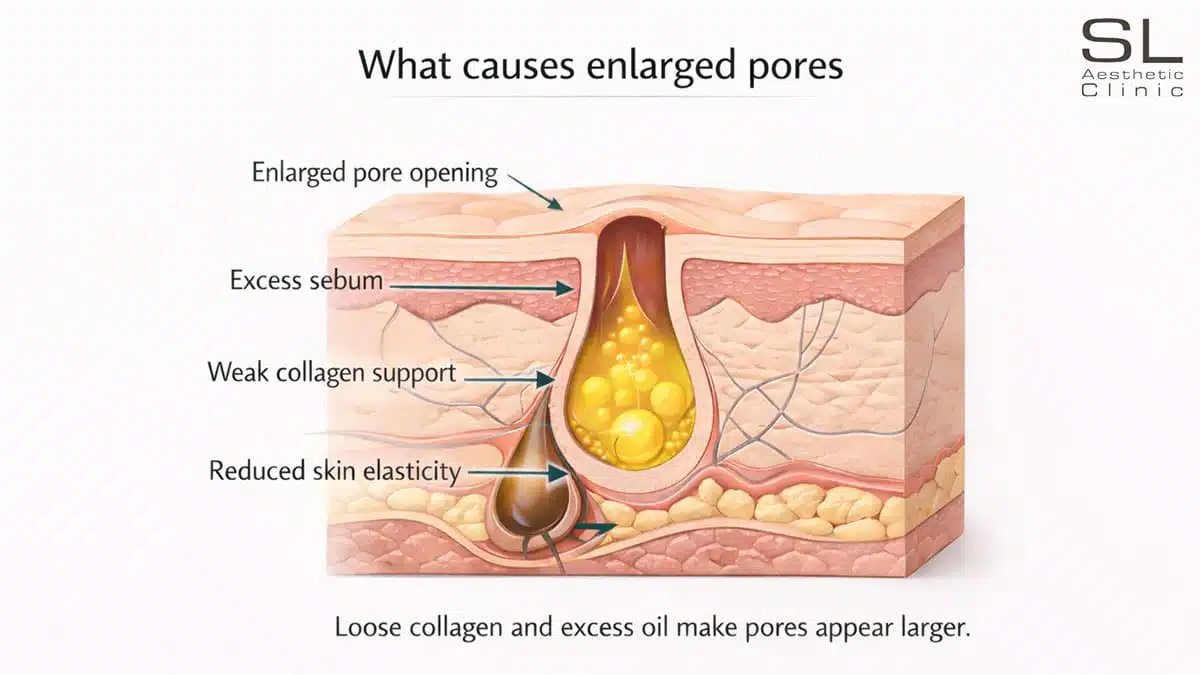
A pore is a small opening in the skin that connects to a hair follicle and sebaceous gland. Its size is largely determined by genetics and skin type, which cannot be changed by any laser treatment. Lasers can improve the appearance of pores by tightening the surrounding skin and stimulating collagen, but they cannot physically shrink the pore itself.
However, lasers can effectively deal with two main causes of enlarged pores: excess oil and elasticity loss. When a laser targets and heats the deeper layer of the skin, it triggers collagen and elastin production, which leads to the tightening of the walls of the pore, making it look more refined and smaller.
While the new collagen stays in your skin, it does not stop the body’s natural process and other external factors:

There are many types of lasers available today to address pores. To make it easier to understand, we can broadly group these lasers into two categories: ablative and non-ablative.
Ablative lasers work by removing the outer layers of the skin, promoting regeneration and improving deeper skin issues. It is usually only used for very enlarged pores and if you have significant texture issues and deep acne scars.
Fractional CO2 Laser: This type of laser works by vaporising microscopic columns of tissue, which tightens the skin surrounding the pore as it heals. The formation of new collagen makes the skin firm and smooth, resulting in minimised pores.
Erbium YAG Laser: This type of laser is more precise than a CO2 laser. It is often preferred by patients who wish to have a shorter downtime. An Erbium laser works by removing skin layers with precision and less residual heat damage to the surrounding area, which effectively addresses textural irregularities in the skin, as well as enlarged pores.
Non-ablative lasers are gentle skin stimulators and this type of treatment does not damage the skin’s surface. The energy from the laser’s light beams bypasses the epidermis and directly penetrates into the skin, delivering energy right into the dermis.
Fraxel Dual: This type of laser is the classic option for dealing with enlarged pores. It uses two wavelengths, which target pores structure and pigmentation separately.
C&B Laser: Otherwise known as “Baby Laser,” this type of laser is a great option to introduce your skin to lasers. It is effective for maintaining the younger skin’s small pores and radiance before signs of significant ageing appear.
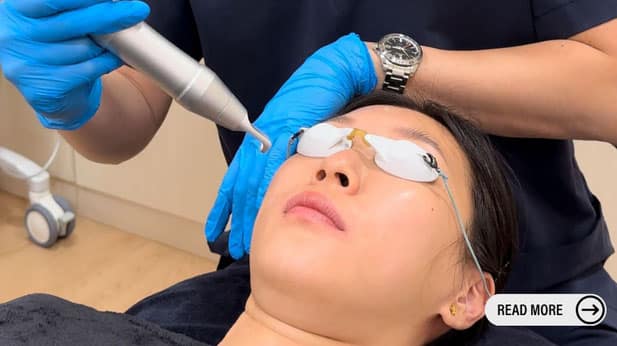
Pico Lasers: These lasers do not use heat, but pressure (photoacoustic energy). It uses ultra-fast laser pulses to cause less damage to skin and speed up recovery. Specifically for enlarged pores, pico laser uses a “fractionated” lens during treatment. This process forms bubbles of tiny air beneath the skin, called Laser-Induced Optical Breakdown (LIOB). New collagen is then formed as the skin begins to heal these bubbles.
Seeing your pores look larger than before your treatment is a common and temporary occurrence. This is a phenomenon called “The Orange Peel Effect.” This usually happens because of:
There is no need to panic when you notice your pores become larger following a treatment as this “texture flare-up” will resolve within a week as the skin heals from swelling and collagen-rich skin resurfaces.
Treating your skin to a laser procedure is giving it permission to reset. However, the longevity of the treatment’s results will depend on your daily skincare and lifestyle habits. You need to follow-up with the right aftercare to keep your skin pore-free.
1. Active Maintenance: Once your skin heals and your doctor gives the go-ahead, include salicylic acid or a gentle retinoid in your daily skincare to promote cell turn over and prevent pore clogging.
2. Double Cleanse: Clean your face by using an oil-based cleanser, then a water-based one to make sure that debris and sebum are thoroughly removed from your pores.
3. Sunscreen Always: Sun-protection is a non-negotiable if you want to protect your investment and see the best results on your skin for long. Without protection, UV rays can easily damage your new and vulnerable skin cells, which makes it challenging to maintain the enhancements you have paid for.
The best laser for your skin depends on your skin type, concerns, and overall goals – there’s no one-size-fits-all solution.
While Pico lasers are often marketed as a go-to treatment for pore issues, they’re not necessarily the default choice for everyone, especially if you have existing skin concerns. For concerns focused purely on pore refinement and skin rejuvenation, C&B laser may be more suitable.
That said, most people with enlarged pores also have other underlying skin issues, such as pigmentation or uneven texture. For the best results, it’s important to take a comprehensive approach and plan treatments based on your skin as a whole, rather than targeting just one concern with a single laser.
Book an appointment with SL Aesthetic Clinic to know which treatment is suited for your skin.
Like what you read? Share them!


Not sure if this treatment is right for you? Speak with our team in a no-obligation consultation, and view real patient results.