
Pico laser review: What kind of results can I expect?
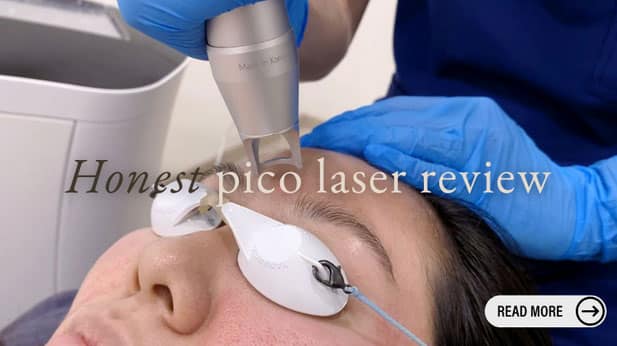
In this comprehensive Pico laser review, we explore what Pico laser can treat, how long it typically takes to see noticeable results, and practical tips to ensure you get the best outcome – turning your treatment from a mediocre result into a radiant glow.
The “magic wand” syndrome is a common misconception in many pico laser reviews; most people expect the treatment to give instant, effortless results.
The truth is pico laser follows a long-term and repeated process in order to be able to provide the best results that can be enjoyed for a long time.
Here are the conditions it can treat with success as long as you follow a plan with an experienced doctor:

Here is the realistic timeline of this procedure, using pigmentation as an example.
Stage One: One to 24 hours after the session
Your skin will look red or pink immediately following the session, giving a sunburn appearance. This stage is temporary and you can expect your skin to feel cooler and less red as it dissipates within 3 to 6 hours.
Stage 2: Three to seven days after the session
Part of the healing process includes the possibility of your spots looking darker and more pronounced, which will make you think that the treatment failed – do not panic. The treatment is working exactly as it should be by pushing the pigment to the surface of the skin.
Stage 3: 10 to 14 days after the session (the “Pico Glow”)
Problem spots usually clear; your skin will look more radiant and even.
Stage 4: One to three months
While the top layer of the skin begins to look better, the work is not over. As the treatment is done during the recommended intervals, collagen remodeling continues to happen in the depths of the skin. For treating acne scarring and fine lines, you can expect to see improvements around 4 to 8 weeks following your second or third pico laser session.
For first-time treatment, a minimum of three sessions spaced three to four weeks apart is recommended to achieve optimal initial results. Since pigmentation including melasma tends to recur over time, follow-up maintenance treatments –one to two sessions once or twice per year –are advised, especially after sun exposure.
For skin rejuvenation and pigmentation concerns, sessions are typically spaced every 4–6 weeks, giving the skin enough time to heal and for your body to naturally remove pigment. For tattoo removal, longer intervals of 6–8 weeks are often recommended, allowing the immune system sufficient time to eliminate ink particles.
It is important to space sessions apart; more does not mean better and may even increase the risk of irritation. After a Pico laser session, your skin enters a healing and regeneration process – this time off is necessary for your skin to heal.
Proper spacing not only reduces side effects –such as prolonged redness, sensitivity, or uneven healing– but also ensures more consistent and noticeable results over time.
To ensure that your pico laser treatment ends on a highly satisfactory rating and not a mediocre one, you need to remember that you have a vital role to play. Here’s what you should do for aftercare:
1. Avoid certain skincare products: Skincare products with active ingredients like AHAs, BHAs, and Retin-A should be stopped 5 days before your treatment. Your skin barrier needs to be calm and not irritated while it recovers from the pico laser session. Only use these when you have clearance from your doctor.
2. Avoid the sun: Your skin will be very sensitive to UV rays after each session. It is highly recommended that you stay out of the sun. If you need to be exposed, be sure you use sunscreen and additional accessories like a hat or an umbrella as additional protection so you do not put your skin at risk of developing post-inflammatory hyperpigmentation (PIH).
3. Avoid picking on the scabs: Brown spots will start to form tiny scabs and will flake off on their own. Your skin does not need your help during this stage. Allow nature to take its course and resist the urge to pick on your scabs as this will only lead to uneven healing and skin damage.
4. Moisturise constantly: Skin that is exposed to laser will become extremely parched. To help it repair its barrier faster, use moisturisers with Ceramides or serums packed with Hyaluronic acid.
Q-Switch lasers use more heat to break down pigmentation. The laser energy targets melanin and essentially “heats it up” to fragment it. While effective, this heat can sometimes affect the surrounding skin – especially in people with darker skin tones. In some cases, this may lead to temporary darkening (post-inflammatory hyperpigmentation), longer downtime, or slower recovery.
Pico laser delivers energy in extremely short pulses that create tiny shockwaves. These shockwaves break pigment into much smaller particles without heavily heating the surrounding skin.
Because of this difference, Pico laser generally has lower risk of heat-related side effects, involves less downtime and is safer for all skin tones.
At SL Aesthetic Clinic, we have discontinued use of Q-switched lasers.
Our honest review is yes, pico laser is worth it as long as your expectations are realistic. Pico laser is not anything like surgical facelift, which can immediately erase fine lines from your skin in 30 to 60 minutes. Rather it works in stages and best with consistent care.
For anyone struggling with mild skin texture complaints, sun damage, or uneven skin tone, pico laser treatment is an investment to consider. It is an effective choice for those who do not have the time to be away from life’s daily routines while recovering from aesthetic treatments.
Contact our clinic to know more about how pico lasers can work for your benefit.
Like what you read? Share them!


Not sure if this treatment is right for you? Speak with our team in a no-obligation consultation, and view real patient results.