
K-Thermal Monopolar RF – RF Skin Tightening and Lifting
K-Thermal Monopolar RF – RF Skin Tightening and Lifting
K-Thermal Monopolar RF Overview
- Sessions Required
One session and up
- Duration of Results
Up to 12 months
- Downtime
Minimal
- Session Duration
30–50 minutes
- Skin Concern
- Sagging skin
- Fine lines and wrinkles
- Loss of jawline definition
- Enlarged pores
- Uneven skin texture
- Double chin
- Sagging eyelids
- Loose neck skin (turkey neck)
- Jowls
What is K-Thermal Monopolar RF?
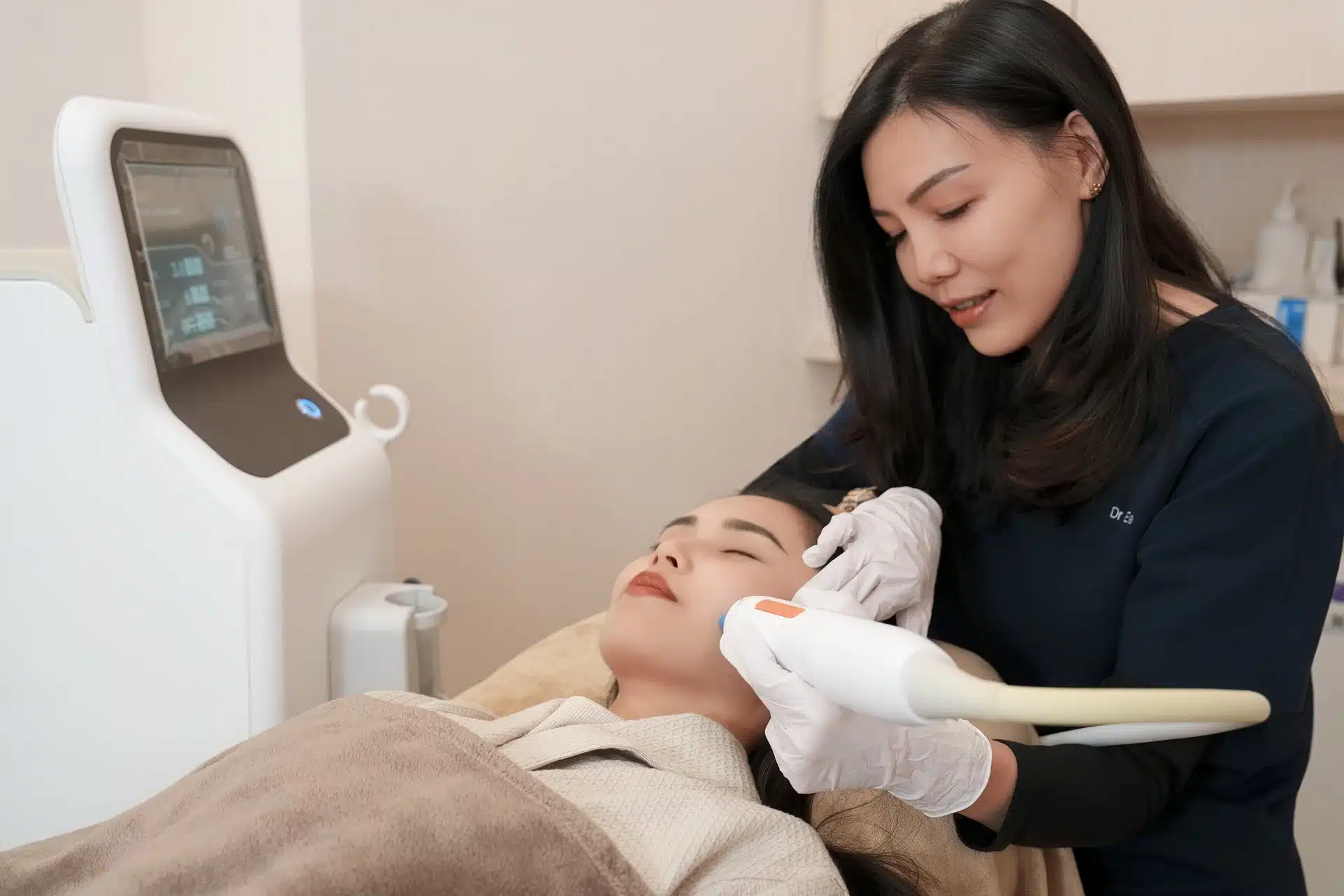
K-Thermal Monopolar RF is a Korean non-surgical skin tightening treatment in Singapore that uses monopolar radiofrequency (RF) energy to gently heat the deeper layers of the skin. This controlled heat may help stimulate collagen renewal over time, supporting firmer-looking skin and improved texture.
K-Thermal Monopolar RF is designed to deliver energy below the skin’s surface while a built-in cooling system protects the outer layer and improves comfort during treatment. Because the energy passes through a larger volume of tissue, K-Thermal Monopolar RF can create deep, wide and more uniform thermal effects than most superficial RF devices.
Features such as vibration may further support comfort, contact consistency, and temperature control during treatment.
Preclinical testing conducted with Gachon University Gil Hospital’s Department of Dermatology showed a measurable increase in collagen levels following treatment, supporting the collagen renewal process.

How Does K-Thermal Monopolar RF Work?
K-Thermal Monopolar RF works in three stages – a thermal response beneath the skin, a deeper regenerative phase over the following weeks, and progressive, visible firming over the months that follow.

Phase 1: Collagen contraction effect
K-Thermal Monopolar RF delivers controlled radiofrequency energy into the deeper layers of the skin, where it creates targeted thermal stimulation, triggering collagen fibers to contract.
The treatment tips are designed to distribute heat evenly across the full contact surface rather than concentrating it in the centre, helping ensure the treated area is covered consistently from edge to edge.
A gentle vibration through the handpiece is built in for comfort, while an automatic cooling system runs before, during, and after each energy delivery, keeping the skin's surface comfortable while heat works in the layers beneath. Built-in sensors confirm proper skin contact and tissue readiness before every pulse, so treatment stays consistent and controlled from start to finish.

Phase 2: Regenerative response
In the weeks following treatment, the skin's natural repair processes activate fibroblasts to produce new collagen and elastin. This remodelling occurs beneath the surface and is not yet visible.

Phase 3: Progressive results
As new collagen matures, improvements in skin firmness and texture typically become more noticeable. Many patients see the most visible change between three and six months after treatment, though individual outcomes vary.
What Skin Concerns Can K-Thermal Monopolar RF Address?
As collagen and elastin levels naturally decline with age, K-Thermal Monopolar RF may help improve the look of common signs of skin laxity, including:
- Sagging skin and loss of facial contour
- Fine lines and wrinkles
- Reduced jawline definition
- Sagging eyelid area
- Enlarged pores and uneven skin texture
- Loose skin on the neck
- Double chin

Where Can K-Thermal Monopolar RF Be Used?
K-Thermal Monopolar RF uses interchangeable tips designed for specific areas of the face and body, allowing treatment to be tailored to different zones and skin concerns. These include:
- Face, including the forehead, under-eye and eyelid area, cheeks, nasolabial folds, jawline, and double chin
- Neck and décolletage
- Body, including upper arms, abdomen, inner thighs, and knees
A dedicated eye tip is used for the delicate periorbital area – including the under-eye and eyelid – allowing intentional treatment in areas where a standard face tip would be too large.
Are There Side Effects of K-Thermal Monopolar RF?
Common side effects of K-Thermal Monopolar RF are mild and temporary, and may include redness, warmth, minor swelling, or tenderness in the treated area. Most resolve within a few hours, with mild dryness occasionally lasting three to five days.
Serious side effects are uncommon when treatment is performed by a trained medical professional. In addition, the device’s built-in temperature monitoring and integrated cooling system help maintain skin comfort and support treatment safety throughout the procedure.
K-Thermal Monopolar RF vs RF ThermaLift FLX: Which Skin Tightening Path Fits You
Both K-Thermal Monopolar RF and RF ThermaLift FLX use deep thermal energy to contract existing collagen and trigger long-term collagen renewal. The right one for you depends on your comfort priorities and how often you’re willing to come back.
If you want a lighter treatment experience with a shorter maintenance cycle:
K-Thermal Monopolar RF is built around integrated cooling and vibration to keep the treatment more comfortable throughout, and typically holds its results for 6 to 12 months.
If you only have time for fewer sessions:
RF ThermaLift FLX is generally the better fit if you prefer to come in once a year as results can last up to 1 to 2 years.
Is K-Thermal Monopolar RF Right for Me?
K-Thermal Monopolar RF is suitable for most adults with mild to moderate skin laxity. It is generally safe across skin types as it does not use light-based energy, carrying a lower risk of pigmentation changes compared to laser treatments.
Speak to a doctor before proceeding if you have a pacemaker or electronic implant, an active skin infection or open wound in the treatment area, metal implants near the treatment area, are pregnant or breastfeeding, or have severe skin laxity that may be better addressed with a surgical assessment.
K-Thermal Monopolar RF Price in Singapore
The price of K-Thermal Monopolar RF at SL Aesthetic Clinic starts from $2400.
FAQ
Is K-Thermal Monopolar RF painful?
Most patients describe K-Thermal Monopolar RF as a warm, pulsing sensation rather than pain. Due to the built-in cooling and vibration system, discomfort is generally low.
Do skin tightening devices really work?
Skin tightening devices, such as K-Thermal Monopolar RF, works by delivering controlled heat into the dermis to stimulate collagen remodelling. As collagen develops over time, patients typically notice gradual improvements in skin firmness, texture, and facial contour. In manufacturer-reported testing, collagen levels in the treated area increased measurably within 30 days of treatment.
What is the difference between K-Thermal Monopolar RF and Ultherapy?
Where K-Thermal Monopolar RF differs most clearly from Ultherapy and HIFU is in what each treatment is designed to address. K-Thermal Monopolar RF heats the dermis – the layer responsible for skin texture, firmness, and collagen density – producing gradual improvements in overall skin quality across the treated area.
Ultherapy and HIFU use focused ultrasound to reach the deeper structural layer beneath the dermis, which is why they are associated with more pronounced lifting effects, particularly around the brows, jawline, and neck.
A consultation with our doctors will help determine which treatment – or combination of treatments – is best suited to your skin’s needs.
How long do K-Thermal Monopolar RF results last?
Results are generally maintained for up to 12 months, although this varies depending on factors such as age, skin condition, and individual collagen response.
How many sessions of K-Thermal Monopolar RF do I need?
Many patients achieve satisfactory results with a single treatment session. However, the number of sessions required depends on the severity of skin laxity and individual treatment goals.
What should I do before K-Thermal Monopolar RF treatment?
Before treatment, your doctor will assess your skin and mark the treatment areas. You may be advised to avoid retinoids and other active skincare ingredients for 48 hours before the procedure. No numbing cream or anesthesia is typically required.
What can I expect during K-Thermal Monopolar RF treatment?
A typical session takes 30 to 50 minutes, with no needles involved. The procedure is non-invasive, and built-in vibration and cooling systems are used throughout to help keep the treatment as comfortable as possible.
What should I expect after K-Thermal Monopolar RF treatment?
Most patients can return to their usual activities immediately after treatment. Your doctor may recommend gentle skincare, daily sunscreen use, and avoiding heat, exfoliating products, and active ingredients for a short period.
Like what you read? Share them!

