Ultherapy Before and After: When Will You See Lifting Effects?
Among the various non-invasive skin tightening treatments available, Ultherapy is widely recognised for its ability to lift and firm the skin with minimal downtime, as well as its endorsements by celebrities like Lee Min Ho and Jun Ji Hyun.
Ultherapy works gradually and is not an instant “magic wand”. In this article, we explore what you can expect before, during, and after an Ultherapy treatment in Singapore, and how results develop over time.

Ultherapy is a non-surgical facelift that uses focused ultrasound energy to stimulate collagen production in the deep layers of the skin. It is the only non-invasive lifting treatment that has received FDA clearance specifically for lifting the brow, chin, and neck, and improving lines and wrinkles on the chest.
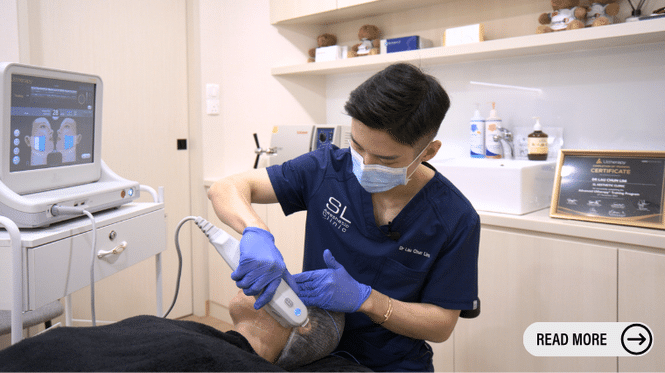
Unlike other lifting devices like HIFU [link to the article on ultherapy vs HIFU], Ultherapy comes with real-time ultrasound imaging that allows the doctor to visualise the tissue layers in real time before and during treatment.
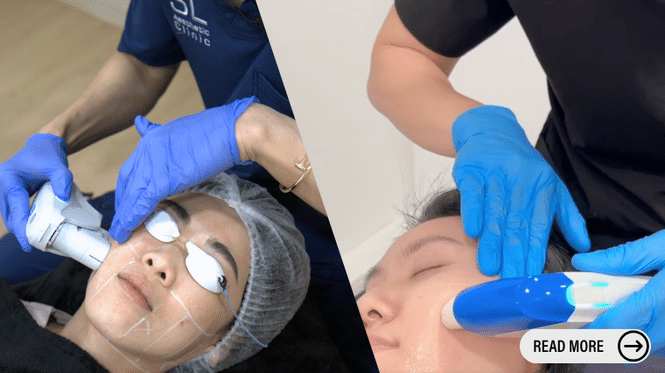
What happens during a session, which can take anywhere from 20-90 minutes depending on the areas treated:
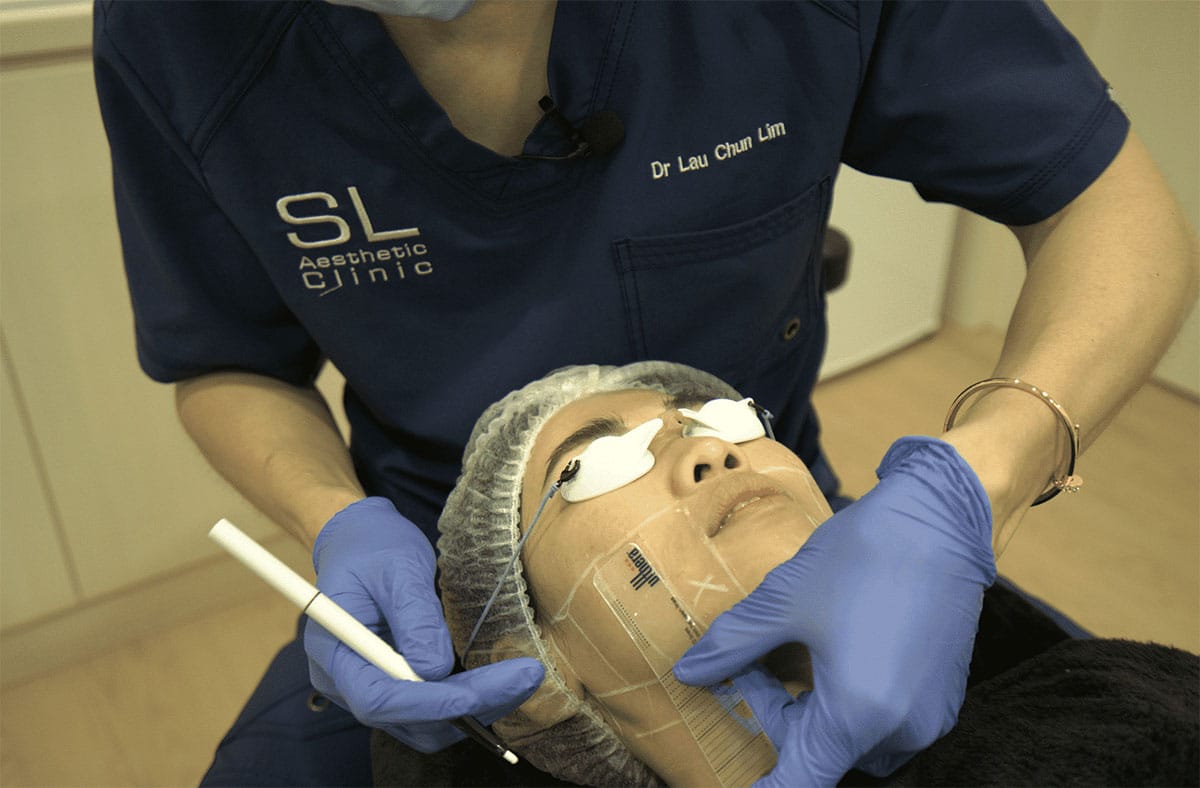
Prior to booking a session, you should go through a thorough consultation with a qualified cosmetic doctor. This is important, so your doctor can properly assess your skin condition and ageing concerns to determine if you are suitable for the procedure.
Unlike other aesthetic procedures, there is only minimal preparation needed for an Ultherapy session; but in some cases, your doctor may advise avoiding topical products that contain irritants a few days before your scheduled session.
A single Ultherapy session is the standard protocol for most patients, and the majority of visible results come from this one session. Results are not immediate; you will not see dramatic change the next day.
However, by the 3–6 month mark following one treatment, most patients see meaningful lifting and tightening. Some patients with more advanced laxity may benefit from a second session, which your doctor can advise on during consultation.
Immediately after your session, you can expect:
For the vast majority of patients, the redness and swelling are mild enough that they are comfortable returning to work or social settings within hours of treatment.
The neck is one of the most popular treatment areas for Ultherapy. Before treatment, patients typically present with loose, crepey skin along the neck (aka turkey neck), a softened jawline-to-neck transition, or visible horizontal lines.
After treatment, patients commonly report a firmer, more defined neck contour and reduced skin laxity. Results in the neck area typically become visible around the 2–3 month mark and continue improving through to 6 months.
Jowling is one of the clearest indicators Ultherapy addresses well. Before treatment, the jawline appears less defined with soft tissue falling below the jaw border.
After treatment, patients typically see a sharper, more lifted jawline as the collagen tightening effect repositions the soft tissue upward. This is one of the most visually striking before/after changes patients report.
Ultherapy works best on people who have mild to moderate skin laxity – meaning the skin has started to loosen but hasn’t significantly sagged yet. Ideal candidates typically present with:
Ultherapy is not ideal for patients with very thin skin, active skin infections, open wounds in the treatment area, or those with certain implanted devices like pacemakers.
Yes – because Ultherapy works by stimulating your body’s own collagen production rather than injecting foreign materials or physically altering tissue, the results tend to look gradual and natural. Friends and colleagues may notice you look more refreshed without being able to pinpoint exactly why.
Ultherapy’s results can last anywhere between 12 to 14 months. Of course, there are certain factors to consider when it comes to the outcome’s longevity like your lifestyle habits, natural ageing process, and skincare routine.
If you want your investment to last longer, follow your aesthetic doctor’s aftercare instructions. It is also recommended to schedule annual maintenance sessions to preserve your hard-earned results after initial treatment.
The general recommendations for Ultherapy include:


With Ultherapy, you can achieve younger looking and lifted skin without going through the old surgical procedure.
As an authorised Ultherapy PRIME® centre, SL Aesthetic Clinic emphasises patient safety and results. Our clinic offers Ultherapy services backed with a Certificate of Authenticity, ensuring that the equipment we use are legitimate.
Beyond equipment, our doctors have completed the Advanced Ultherapy Training Program, placing us among a select few clinics in Singapore with this level of clinical experience.
Do not compromise your skin; schedule your consultation with us today for an authentic Ultherapy experience.
Like what you read? Share them!


Not sure if this treatment is right for you? Speak with our team in a no-obligation consultation, and view real patient results.