
Why the Same Treatment Gives Different Results at Different Singapore Aesthetic Clinics
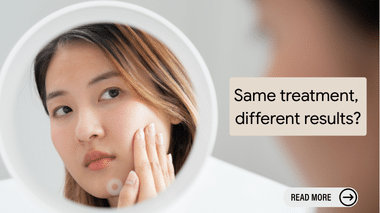
If you have noticed that the same aesthetic treatment can deliver different results across aesthetic clinic Singapore providers, that difference is real, and it usually has a straightforward explanation.
A treatment name on a clinic’s menu offers only a surface-level indication of what is being done. In practice, the factors that shape your outcome include the clinic’s protocols, the doctor’s clinical judgement, the device or product used, and how well the treatment is individualised to your anatomy, skin problem and goals.
Here are what those factors are, and what to look out for before booking your next appointment.
More than most other factors, yes.
The person behind the device often matters more than the device itself. Not all practitioners hold the same depth of training, and the difference between a doctor, nurse, or aesthetician can affect both safety and outcome. This is a key marker of aesthetic clinic quality that Singapore patients should pay attention to.
For injectables, anatomical knowledge is key, as understanding facial structure, tissue planes, and injection depth affects where the product lands and how naturally it settles. Small technical choices, such as the type of needle, injection speed, bolus size, and placement precision, can create visible differences once they add up – which is why filler results can vary significantly between clinics.
Experience with diverse face shapes and skin types also matters, particularly in Southeast Asia, where anatomical patterns and skin concerns vary considerably.
Before committing to a clinic, establish what specific training the practitioner holds and how frequently they perform the procedure in question. Many patients actively seek doctor-performed aesthetic treatments for this reason, particularly for injectables and more advanced procedures.
Even when a treatment name sounds identical across clinics, the product itself may not be.
Counterfeit and grey-market fillers and anti-wrinkle products do circulate in the region, which makes product verification an important part of safe practice. Authentic products should arrive in sealed, properly labelled packaging with verifiable batch numbers.
A reputable clinic will be transparent about this and should be able to show you the box label and batch details before treatment begins.
Underdosing is a separate but equally common issue, and a major reason behind why aesthetic treatments did not work for some patients. This occurs when products such as skinboosters and toxins have been diluted beyond its standard concentration, or when the volume of filler placed falls short of what your anatomy actually requires for a visible result.
If your toxin results lasted six weeks rather than the expected three to four months, or if your filler produced no discernible change, underdosing is a plausible explanation. Ask your clinic to confirm the units used and the product concentration.
Laser and energy-based devices are only as effective as the settings used for each patient, and is one of the main reasons results can vary so widely.
There are two ways settings can go wrong. The first is over-treatment, which raises the risk of burns, post-inflammatory hyperpigmentation, or prolonged downtime.
The second more common reason is under-treatment, where parameters are set conservatively to reduce the chance of adverse effects but may also reduce visible results.
Clinics with less experienced doctors may choose cautious settings to reduce risk, but that can leave patients under-treated. In many cases, when patients say a laser “did nothing,” the treatment was likely too conservative rather than completely ineffective.
Device maintenance is also a factor that rarely gets discussed. An uncalibrated or poorly maintained machine does not deliver consistent energy output, regardless of what the screen displays.
This is where the most meaningful differences between clinics become visible.
A patient presenting with stubborn pigmentation may have several distinct underlying causes, such as sun damage or post-inflammatory hyperpigmentation, or a combination. Each cause responds to a different protocol. A clinic that assesses only the visible surface will apply a standard pigmentation laser and move on. What’s more meaningful is when the clinic investigates contraceptive history, stress levels, diet, and sun exposure, and performs a detailed examination such as dermoscopy, to construct a protocol that addresses the actual cause.
The same principle applies across most skin concerns. Acne, sensitivity, and early laxity all have contributing factors that happen outside the treatment room. The clinics producing the most consistent outcomes tend to take a thorough history before they recommend anything.
It is also worth reflecting on your own patterns as a patient. Many aesthetic results are cumulative, building over a series of treatments at the correct intervals. Changing clinics or abandoning a protocol before completion removes the consistency that delivers results.
The first time consultation often tells you what you need to know before treatment begins.
A well-run consultation should make you feel heard. The practitioner should listen to your concerns and expectations, as well as previous experience with aesthetic treatments.
Watch for gaps such as no medical history review, discussion of contraindications, or explanation of expected results and risks. For more complex treatments, it is worth clarifying who will perform the procedure.
As a practical guide, ask four key questions: who will perform the procedure, what product or device will be used, what results are realistic, and how any unexpected outcomes will be managed.
A patient cannot control every factor, but they can control how they select a clinic and how consistently they follow a recommended plan. If you are searching for an aesthetic clinic Singapore patients trust, or aiming to identify the best aesthetic clinic, transparency, clinical thoroughness, and clear communication are where the real difference begins. Book a consultation with SL Aesthetic Clinic today.
Like what you read? Share them!


Not sure if this treatment is right for you? Speak with our team in a no-obligation consultation, and view real patient results.