
Pigmentation Removal Singapore | Melasma, Freckles & Dark Spots Treatment
Pigmentation Treatment in Singapore: Why Accurate Diagnosis Matters
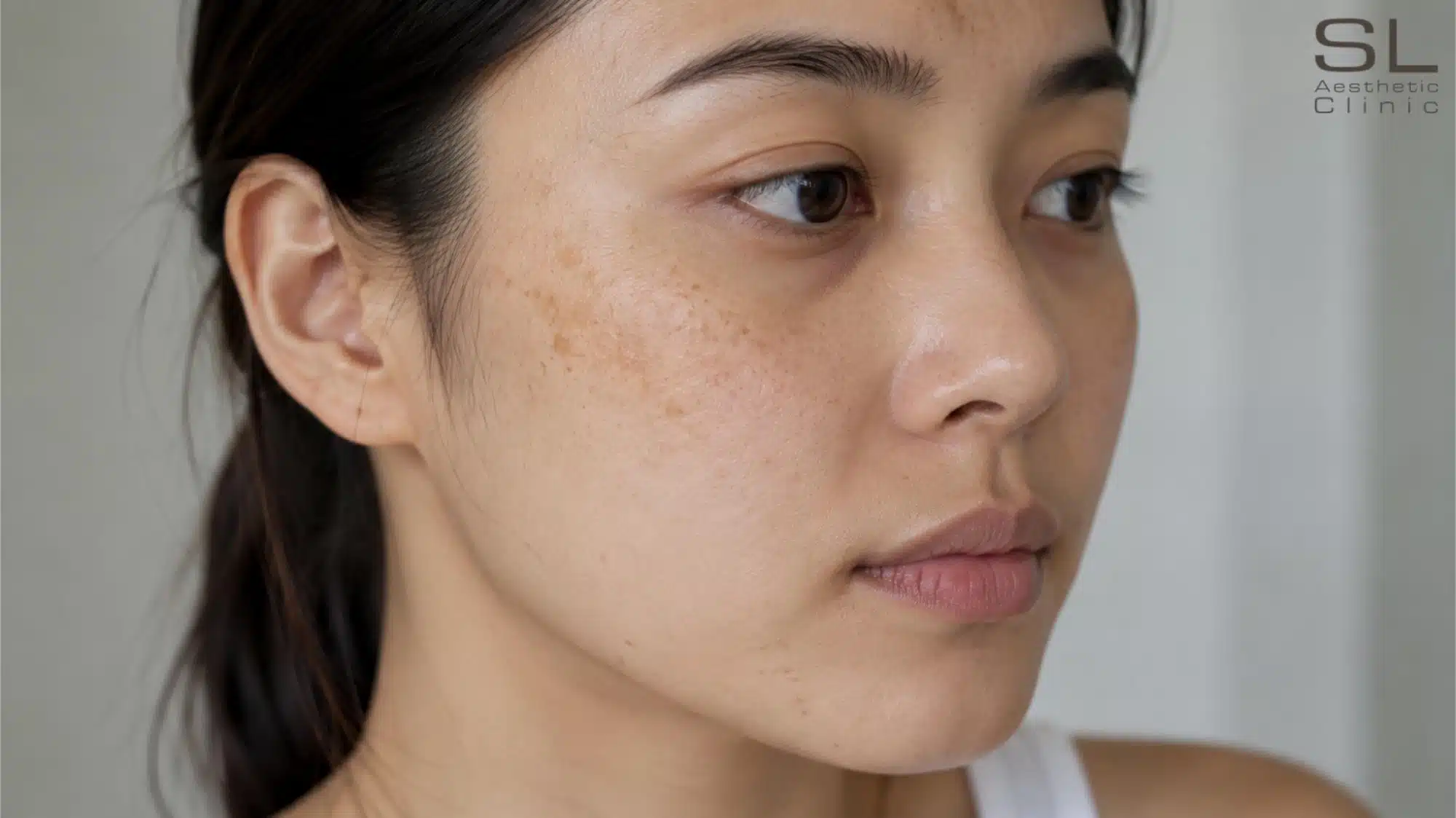
Skin pigmentation is one of the most common skin concerns in Singapore and one of the most frequently mistreated. The same spot can look like a freckle, sun spot, melasma patch, or post-inflammatory hyperpigmentation depending on its cause, depth, and distribution. These are not the same condition, and they do not respond to the same treatments.
Treating pigmentation effectively starts with identifying the type, depth, and underlying trigger. A laser that clears solar lentigines can worsen melasma. A peel that works for post-inflammatory hyperpigmentation may do nothing for dermal pigmentation. At SL Aesthetic Clinic, our doctors classify your pigmentation accurately before recommending any treatment because the right diagnosis is what determines whether treatment works.
What Is Skin Pigmentation?
Skin pigmentation refers to the colouring of the skin, determined by the amount and distribution of melanin produced by melanocytes, the pigment-producing cells in the basal layer of the epidermis. When melanocytes overproduce melanin in certain areas, or when melanin is distributed unevenly, it results in patches or spots of darker skin that contrast with the surrounding complexion.
Pigmentation disorders are particularly prevalent in Singapore’s population due to consistently high UV exposure year-round, the prevalence of higher Fitzpatrick skin types (III–V) that produce more melanin in response to UV and inflammation, and hormonal factors that drive conditions such as melasma. While rarely medically dangerous, pigmentation significantly affects skin appearance and many patients’ confidence, and it is treatable with the right clinical approach.
Accurate pigmentation classification is the foundation of effective treatment. The main types our doctors assess and treat:
Melasma — Irregular brown or greyish patches, most commonly on the cheeks, upper lip, forehead, and nose bridge. Melasma is driven by a combination of UV exposure, hormonal influence (particularly oestrogen it is significantly more common in women and often worsens during pregnancy or with the oral contraceptive pill), and genetic predisposition. It is one of the most challenging pigmentation conditions to treat because it is chronic, often recurrent, and can be worsened by certain laser treatments if not selected and calibrated correctly.
Solar lentigines (sun spots/age spots) — Flat, well-defined brown spots caused by cumulative UV exposure. They are most common on sun-exposed areas of the face, hands, décolletage, and shoulders, and increase in number and size with age and ongoing sun exposure. They respond well to laser treatment and are among the most straightforward pigmentation types to address.
Ephelides (freckles) — Small, flat, light brown spots that are genetically predisposed and become more prominent with sun exposure. Common in patients with lighter skin tones or East Asian heritage. They fade with sun avoidance and respond to laser and topical treatments.
Post-inflammatory hyperpigmentation (PIH) — Dark marks left on the skin after an inflammatory event, most commonly acne, but also eczema, injury, or any procedure that causes skin trauma. PIH is not a structural scar; it is a pigmentation response that fades over time, faster with targeted treatment. The tendency to develop PIH is more pronounced in darker skin tones.
Hori’s naevus — A form of acquired dermal melanocytosis presenting as blue-grey or brownish-grey speckled patches, typically on the cheeks and nose. It is more common in Asian women and involves melanocytes in the dermis rather than the epidermis, which means superficial treatments are ineffective, and specific lasers targeting dermal pigment are required.
Naevus of Ota — A congenital or acquired dermal melanocytic lesion producing blue-grey discolouration, typically around the eye, temple, and cheek. Requires targeted laser treatment.
Drug-induced pigmentation — Certain medications (including some antimalarials, antipsychotics, and chemotherapy agents) can cause diffuse or localised pigmentation changes. Treatment depends on whether the causative medication can be discontinued.
What Are the Different Types of Skin Pigmentation?

The root triggers for excess pigmentation vary by type, but the most clinically relevant in Singapore are:
UV exposure is the primary driver of most surface pigmentation, such as solar lentigines, ephelides, and uneven skin tone. Singapore’s position near the equator means the UV index is high year-round, and cumulative UV damage accumulates even with incidental daily exposure. UV stimulates melanocytes to produce melanin as a protective response, and repeated stimulation leads to uneven melanin distribution and permanent pigmentation deposits.
Hormonal factors are the primary driver of melasma, particularly in women. Oestrogen and progesterone stimulate melanocyte activity. This is why melasma commonly develops or worsens during pregnancy, with the oral contraceptive pill, or during perimenopause. Without addressing the hormonal trigger alongside UV, melasma treatment alone rarely produces sustained clearance.
Post-inflammatory response drives PIH. Any inflammatory skin event can trigger excess melanin production in the healing tissue, particularly in patients with Fitzpatrick skin types III–V. This is why acne, eczema, and aggressive skin treatments that cause inflammation without proper preparation can worsen pigmentation rather than improve it.
Genetic predisposition determines baseline melanocyte activity, the tendency to develop melasma, and the distribution of freckles and certain naevi. Genetics cannot be changed, but its expression can be managed.
What Causes Skin Pigmentation?

Our Pigmentation Treatments at SL Aesthetic Clinic
Each treatment below addresses pigmentation through a different mechanism. Your doctor at SL Aesthetic Clinic will recommend the appropriate treatment or combination based on your pigmentation type, depth, skin tone, and triggers.
Pico Pigmentation Laser
The Pico Pigmentation Laser uses ultra-short laser pulses to break down pigment in the skin with minimal heat, making it a suitable option for darker skin tones that are more prone to discolouration after treatment. It is effective across a range of pigmentation concerns, including sun spots, post-acne marks, and melasma, with your doctor selecting the right settings based on your skin tone and pigmentation type.
C&B Laser 素颜光
The C&B Laser (素颜光) uses multiple wavelengths to target pigmentation, uneven skin tone, and dullness in a single no-downtime session. It is well suited to mild to moderate pigmentation concerns such as sun spots and post-acne marks, and works well as a maintenance treatment between more intensive procedures.
Full Beam Resurfacing Laser
The Full Beam Resurfacing Laser removes the outer layers of the skin to clear pigmented cells and reveal fresher, more even-toned skin beneath. It delivers more noticeable improvement per session for those with significant sun damage or pigmentation, with our doctors carefully selecting the right approach for your skin tone to ensure safe, effective results.
Ethosome Gold PTT
The Ethosome Gold PTT uses gold nanoparticle technology to target overactive pigment-producing cells at their source, helping to reduce pigmentation from within rather than simply breaking down existing pigment. It is particularly useful for pigmentation driven by overactive melanocyte activity, including certain forms of melasma and post-inflammatory marks.
RF Gold Microneedling 黄金微针
RF Gold Microneedling (黄金微针) uses radiofrequency energy delivered through fine microneedles to improve skin texture and tone. For pigmentation, it helps topical brightening treatments penetrate more effectively and improves overall skin evenness, making it a useful complement to laser-based pigmentation treatments, including for those with darker skin tones.
Not sure which treatment is right for you? Book a consultation with our doctor.
Cosmelan Peel
The Cosmelan Peel is a two-phase treatment specifically designed for melasma, combining an in-clinic application with a home maintenance routine to address both existing pigment and the underlying processes that cause it to return. It is suitable for all skin tones and works progressively over the maintenance phase to visibly improve melasma.
Cysteamine Whitening Cream
Cysteamine Whitening Cream is a prescribed topical treatment that targets pigmentation through multiple pathways, making it an effective and well-tolerated option for long-term use. It is suitable for all skin tones and pigmentation types, and is a strong choice for those who have not responded well to other depigmentation creams or who need ongoing support after laser treatment.
Depigmentation Cream
Depigmentation creams prescribed at SL Aesthetic Clinic are doctor-formulated treatments designed to fade pigmentation and prevent it from returning. They may be used on their own for mild pigmentation, to prepare the skin before laser or peel treatments, or to maintain results afterwards. Your doctor will prescribe the right formulation for your skin type and pigmentation concern.
Multi Corrective Redness Cream
The Multi Corrective Redness Cream addresses redness and discolouration as part of a broader pigmentation management plan. It is especially helpful for those whose pigmentation concerns are accompanied by redness or sensitive, reactive skin, helping to calm and stabilise the skin before pursuing more targeted pigmentation treatments.
Pigmentation Medication
Oral pigmentation medication addresses pigmentation from within, reaching the hormonal triggers that topical treatments and lasers cannot fully address. This makes it particularly useful for melasma, a stubborn form of pigmentation that often resists surface-level treatments alone. Oral tranexamic acid is the most established option used in Singapore, with published data showing meaningful improvement, and is often combined with laser treatment for more lasting results.
Not sure which treatment is right for you? Book a consultation with our doctor.
Glass Skin Customised Skinbooster 水光针
The Glass Skin Customised Skinbooster (水光针) is a micro-injection treatment compounded by our doctor specifically for your skin on the day of treatment. For pigmentation concerns, brightening actives can be incorporated into the formulation and delivered directly into the skin, supporting pigmentation management from within while improving overall skin quality.
PN Newest 神颜针
PN Newest (神颜针) supports skin renewal and repair, with anti-inflammatory properties that help reduce the post-inflammatory pigmentation that can follow laser or peel treatments. It is a useful addition to a pigmentation treatment plan, supporting healing and helping to maintain results.
PN Restore
PN Restore uses polynucleotide technology to support and repair skin that has been stressed or sensitised, particularly helpful for those with persistent post-inflammatory pigmentation or skin that has reacted to previous treatments. It helps stabilise the skin and supports more lasting pigmentation treatment outcomes.
Not sure which treatment is right for you? Book a consultation with our doctor.
Skin Rejuvenation Treatment Details

Pico Pigmentation Laser
The Pico Pigmentation Laser uses ultra-short picosecond pulses delivered in trillionths of a second to shatter melanin particles in the skin through a photoacoustic mechanism rather than the photothermal mechanism of older nanosecond lasers. Because energy is delivered so rapidly, the surrounding tissue absorbs minimal heat, significantly reducing the risk of post-inflammatory hyperpigmentation that can result from thermally-based laser treatments. This makes the Pico laser the preferred option for patients with darker skin tones (Fitzpatrick III–V) who are more reactive to thermal injury.
The Pico laser is effective across multiple pigmentation types, such as solar lentigines, ephelides, Hori’s naevus, post-acne hyperpigmentation, and melasma, when used with appropriate protocols and in combination with topical pigmentation management. Different wavelengths target different chromophores: 532nm for superficial epidermal pigment, 1064nm for deeper dermal pigment. Your doctor will select the appropriate parameters based on your specific pigmentation type and skin tone.
Cosmelan Peel
The Cosmelan Peel is one of the most clinically validated depigmentation treatments for melasma specifically. It is a two-phase protocol: an in-clinic application of the Cosmelan 1 mask (worn for a prescribed number of hours based on skin type), followed by a home maintenance phase using Cosmelan 2 cream applied daily for several months. Together, these phases address both existing melanin deposits and the enzymatic pathway responsible for continued melanin overproduction.
The mechanism targets tyrosinase, the key enzyme in melanin synthesis, through multiple inhibitory pathways simultaneously, making it more effective than single-active depigmentation creams. It also has anti-inflammatory and antioxidant components that help manage the inflammatory trigger of melasma. Cosmelan is appropriate for all skin tones but requires careful skin preparation and post-treatment management to minimise irritation. Results are progressive over the maintenance phase, with significant improvement in melasma visible from 4 to 8 weeks.
C&B Laser
The C&B Laser (素颜光) uses multiple wavelengths to simultaneously address epidermal pigmentation, skin tone unevenness, and dullness in a single no-downtime session. For pigmentation specifically, it targets melanin deposits in the superficial skin layers, breaking them down and allowing the body’s lymphatic system to clear the fragments. The multi-wavelength approach means it simultaneously addresses the redness and uneven tone that frequently coexist with pigmentation concerns.
The C&B Laser is most effective for mild to moderate epidermal pigmentation, solar lentigines, ephelides, and post-inflammatory hyperpigmentation, and is a strong maintenance treatment between deeper interventions. Its no-downtime profile makes it suitable as a regular treatment for patients wanting progressive improvement without recovery time.
Full Beam Resurfacing Laser
The Full Beam Resurfacing Laser is an ablative treatment that removes the outer layers of the skin with precision, eliminating the pigmented epidermal cells along with them and triggering the growth of fresh, more evenly pigmented skin. It delivers more significant improvement per session than non-ablative options for patients with pronounced sun damage, extensive solar lentigines, or uneven skin tone driven by years of UV accumulation.
Full Beam Resurfacing is most appropriate for patients with significant epidermal pigmentation changes and requires careful patient selection based on skin tone — the post-procedure inflammatory period carries a higher PIH risk in darker skin types, and the treatment requires thorough pre and post-treatment protocols to manage this. Downtime is typically 5 to 7 days of redness and peeling.
Ethosome Gold PTT
The Ethosome Gold PTT uses photothermal therapy with gold nanoparticle technology delivered via ethosomes, lipid carriers that facilitate deep penetration into the skin. The gold nanoparticles selectively absorb light energy and convert it to heat, specifically targeting overactive melanocytes and sebaceous glands while leaving surrounding tissue intact. For pigmentation, this selective targeting reduces melanin overproduction at its source, the melanocyte, rather than simply breaking down existing pigment deposits.
This mechanism makes it particularly useful for patients with a strong melanocyte activity component to their pigmentation, including some melasma presentations and post-inflammatory hyperpigmentation, where the melanocyte itself is overactive rather than merely having deposited excess pigment.
Cysteamine Whitening Cream
Cysteamine Whitening Cream is a prescribed topical depigmentation agent that inhibits melanin synthesis through multiple mechanisms, including inhibiting tyrosinase activity, scavenging dopaquinone (a melanin synthesis intermediate), and reducing peroxidase activity in melanocytes. This multi-pathway approach gives it an advantage over single-mechanism depigmentation agents such as hydroquinone. It is also better tolerated than hydroquinone for long-term use.
Cysteamine cream is applied once daily, typically in the evening, and washed off after 15 minutes. It is suitable for all pigmentation types and all skin tones, and is a strong option for patients who have not responded well to hydroquinone or who require a long-term maintenance agent after laser treatment. Results are typically visible from 12 to 16 weeks of consistent use.
Depigmentation Cream
Depigmentation creams prescribed at SL Aesthetic Clinic are doctor-formulated topical agents designed to suppress melanin production and fade existing pigmentation over a course of daily application. Unlike over-the-counter brightening products, prescription depigmentation formulations contain active concentrations of ingredients that are clinically effective, which also means they require appropriate medical supervision to minimise the risk of irritation or rebound pigmentation.
Depigmentation creams are most commonly used as a standalone treatment for mild pigmentation, as a preparatory treatment before laser or peel procedures to suppress melanocyte reactivity and reduce PIH risk, or as a maintenance treatment after procedures to preserve results and prevent recurrence. Your doctor will prescribe the appropriate formulation for your skin type and pigmentation concern.
Glass Skin Customised Skinbooster
The Glass Skin Customised Skinbooster (水光针) is a micro-injection formulation compounded by our doctor specifically for your skin on the day of treatment. For patients with pigmentation concerns, the doctor may incorporate brightening actives such as vitamin C, glutathione, tranexamic acid, or antioxidant peptides alongside the base hydrating formulation, delivering them directly into the dermis where topical application cannot reach. This approach supports pigmentation management from within the skin while simultaneously improving overall skin quality.
Multi Corrective Redness Cream
The Multi Corrective Redness Cream is a clinically formulated topical that addresses skin redness, post-inflammatory discolouration, and reactive skin as part of a broader pigmentation management protocol. It is particularly useful for patients whose pigmentation concerns include a significant redness or erythema component, such as post-acne redness alongside PIH, or whose skin is sensitive and reactive in a way that makes more aggressive pigmentation treatments difficult to use without first stabilising the skin barrier.
Pigmentation Medication
Oral pigmentation medication addresses pigmentation systemically through pathways that topical treatments and lasers cannot reach. This is particularly relevant for melasma, which has a significant internal hormonal and melanocyte activation component that surface-level treatments alone cannot fully address. Oral tranexamic acid is the most widely used and evidence-supported oral agent for melasma in Singapore, with published data demonstrating a meaningful reduction in melasma severity with good tolerability.
Oral medication is particularly valuable for patients with moderate to severe melasma that has not responded adequately to topical treatments alone, or as a combination approach alongside laser treatment to suppress melanocyte reactivation and extend the results of procedure-based treatment.
PN Newest
PN Newest (神颜针) is a polynucleotide formulation that supports deep skin renewal and cellular repair. In the context of pigmentation treatment, its anti-inflammatory and regenerative properties help reduce the post-inflammatory pigmentation response, making it a useful adjunct treatment following laser or peel procedures to support healing, reduce the inflammatory stimulus that can trigger PIH, and maintain the skin quality improvements achieved.
PN Restore
PN Restore uses polynucleotide technology to restore compromised or inflammation-stressed skin from within. For pigmentation patients, particularly those with chronic post-inflammatory hyperpigmentation or skin that has been sensitised by previous aggressive treatments, PN Restore provides a regenerative foundation that stabilises the skin’s inflammatory response and supports more durable pigmentation treatment outcomes.
RF Gold Microneedling
RF Gold Microneedling (黄金微针) delivers radiofrequency energy via fine microneedles into the dermis, stimulating collagen remodelling and improving overall skin quality. For pigmentation, it contributes through two mechanisms: the controlled micro-channels created by the needles facilitate better penetration of topical depigmentation agents applied post-treatment, and the RF-driven skin remodelling improves the overall evenness and texture of the skin in ways that complement laser-based pigmentation treatments. It is also one of the safer energy-based treatments for darker skin tones due to its dermal rather than epidermal energy delivery.
Preventing Pigmentation and Maintaining Results
Clinical pigmentation treatment addresses existing deposits and suppresses active melanin overproduction, but without ongoing sun protection and maintenance, pigmentation will recur. Key principles:
- Daily broad-spectrum SPF 50 sunscreen is the single most important step in both preventing and maintaining treatment results. In Singapore’s UV environment, this applies every day, including cloudy days and indoors near windows.
- Avoid peak UV hours (10am to 4pm) where possible, and use physical sun protection (hats, UV-protective clothing) in addition to sunscreen.
- For melasma specifically, address hormonal triggers where possible in discussion with your doctor. This may include reviewing the oral contraceptive pill or other hormonal medications.
- Maintain prescribed topical treatments consistently; irregular use is a common reason for partial or short-lived results.
- Schedule maintenance laser or peel sessions as recommended by your doctor. Pigmentation, particularly melasma, benefits from ongoing periodic treatment rather than one-off intervention.
How Much Does Pigmentation Treatment Cost in Singapore?
Pigmentation treatment in Singapore costs from S$80 to S$1,400 per session at SL Aesthetic Clinic, depending on the treatment type. For a full breakdown, refer to our price list or book a consultation with our doctors for a personalised estimate.
FAQ
What is the most effective pigmentation treatment in Singapore?
It depends entirely on the type of pigmentation. For melasma, a combination of the Cosmelan Peel or oral tranexamic acid with topical maintenance and regular laser sessions produces the best sustained results because melasma requires ongoing suppression of melanocyte activity, not just treatment of existing deposits. For solar lentigines and sun spots, the Pico Laser delivers fast, effective clearance with minimal risk. For post-inflammatory hyperpigmentation, the C&B Laser combined with a topical depigmentation cream is typically the most efficient approach. A doctor’s assessment is essential — using the wrong treatment for the pigmentation type is one of the most common reasons pigmentation treatment fails.
Can melasma be permanently cured?
Melasma cannot be permanently cured in most cases; it is a chronic condition driven by ongoing hormonal and UV triggers that cannot always be fully eliminated. What treatment achieves is significant, sustained lightening and suppression of the condition. Many patients maintain near-clear skin with appropriate ongoing management, consistent sun protection, periodic laser or peel treatments, and topical maintenance. The goal of treatment is not a one-time fix but long-term control.
Why does my pigmentation keep coming back after laser treatment?
Recurrence after laser treatment is most commonly caused by continued UV exposure without adequate sun protection, ongoing hormonal triggers (particularly in melasma), or stopping topical maintenance treatment too early. Laser removes existing pigment deposits but does not permanently suppress the melanocytes from producing new pigment. Without addressing the ongoing trigger, especially sun protection, pigmentation will recur, often within weeks to months of treatment. This is why our doctors always address trigger management alongside procedure-based treatment.
Is laser treatment for pigmentation safe for darker skin tones?
Yes, when the correct laser technology and parameters are selected. The key risk with laser pigmentation treatment in darker skin tones (Fitzpatrick III–V common in Singapore’s Chinese, Malay, and Indian population) is post-inflammatory hyperpigmentation triggered by the laser’s thermal injury. The Pico laser’s photoacoustic rather than photothermal mechanism significantly reduces this risk compared to older nanosecond lasers. Our doctors at SL Aesthetic Clinic always assess Fitzpatrick skin type before selecting treatment parameters, and in some cases will recommend topical pre-treatment to suppress melanocyte reactivity before laser.
What is the difference between pigmentation and post-inflammatory hyperpigmentation (PIH)?
Pigmentation is a broad term covering any form of uneven skin colour caused by excess melanin. Post-inflammatory hyperpigmentation (PIH) is a specific subset caused by the skin’s inflammatory response to injury or irritation, most commonly acne, but also eczema, cuts, or overly aggressive skincare. PIH is not a structural change to the skin; it is a pigmentation response that fades naturally over time, but can be significantly accelerated with appropriate treatment. True pigmentation conditions like melasma, solar lentigines, and Hori’s naevus are generally longer-lasting and require more targeted intervention.
How many sessions of laser treatment are needed for pigmentation removal?
This varies considerably by pigmentation type and severity. Solar lentigines and freckles often show significant improvement in 2 to 4 Pico laser sessions. Post-inflammatory hyperpigmentation may clear in 3 to 6 sessions. Melasma, which is a chronic condition typically requires an ongoing treatment protocol rather than a fixed number of sessions, with many patients benefiting from quarterly maintenance treatments alongside daily topical management. Your doctor will give you a realistic timeline at the consultation based on your specific pigmentation presentation.
Like what you read? Share them!

